Best Adjustable Sandbags: Yes4All Takes the Lead

A ranked look at five unfilled sandbags, judged on handle count, shell denier, published dimensions and what each one actually stores as. Plus the one pick that folds flat.

By Lauren RossUpdated 15 min read
On this page
- Best adjustable sandbag for small spaces at a glance
- How I matched five sandbags to five different lifters
- 1. Yes4All Sandbags for Working Out — Best overall
- 2. Taeku Fitness Sandbag with Handles — Runner-up
- 3. RDX Sandbag for Fitness Weights Training — Best large-capacity
- 4. Exerbell Foldable Adjustable Kettlebell Water Sandbag — Best premium
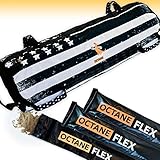
- 5. Octane Flex Adjustable Sandbags for Fitness 75lb — Best budget pick
- Does a sandbag actually work in a small space?
- How many handles do you really need?
- What the sandbag listings leave out
- Filling, storing and living with one
- The verdict
- FAQ
The best adjustable sandbag for small spaces is the Yes4All Sandbags for Working Out, because it packs down to a 4.33 x 10.2 x 10.2 in shell that weighs 2.65 lb empty and still spans a 25 to 75 lb filler range. If your only storage is a drawer, the Exerbell Foldable Adjustable Kettlebell Water Sandbag folds flat at 1.14 lb instead. Get this choice wrong and you end up with a 25-inch tube of dead sand you have to trip over, or a bag that leaks grit into the carpet on its third slam.
Best adjustable sandbag for small spaces at a glance
| Pick | Filler range | Handles | Price |
|---|---|---|---|
Best overall Yes4All Sandbags for Working Out |
25–75 lb size 5–200 lb claim |
7 rubber | Check Price |
Runner-up Taeku Fitness Sandbag with Handles |
3 filler bags Large size |
6 reinforced | Check Price |
Best large-capacity RDX Sandbag for Fitness Weights Training |
25–75 lb size 5–200 lb claim |
8 strategic | Check Price |
| 22 lb water 30 lb sand claim |
Kettlebell grip | Check Price | |
Best budget pick Octane Flex Adjustable Sandbags for Fitness 75lb |
3 x 25 lb bags 25–75 lb claim |
Handles, count not listed | Check Price |


How I matched five sandbags to five different lifters
I did not screen these by shell fabric, which is where most sandbag guides start. I screened them by who ends up owning them.
There are five buyers in this category, and each one wants a different shape of bag:
- The one-bag household. Wants a single shell that covers light conditioning and heavy carries. Needs a real filler range and handles on every axis.
- The shoulder-carry lifter. Wants length, because a long bag sits across the traps instead of digging in.
- The person planning ahead. Buys for the weight they want in two years, not the weight they lift now.
- The traveller. Storage is a carry-on or a drawer. Empty weight and folded footprint decide everything.
- The first-timer. Wants the filler bags in the box so there is nothing else to buy.
Then I lined up the published specifications side by side and matched each bag to the buyer it actually fits. That ordering is why the cheapest pick here sits last rather than first, and why the most compact one is not the winner. Folding flat is genuinely useful, but a 30 lb ceiling rules out most of what a sandbag is for.
One note on the small-space angle: only one of these five bags is described by its maker as built for tight quarters. The rest are ordinary sandbags that happen to store better or worse than each other. I judged them on their published dimensions and empty weights rather than on any promise about apartments.
1. Yes4All Sandbags for Working Out — Best overall
A 2.65 lb shell with seven handles and published dimensions under 11 inches on its longest side, which is the rare combination in this group.
Best for: someone who wants one bag to cover 25 to 75 lb of loading Skip it if: you need it to disappear into a drawer between sessions
This is the only pick in the set that publishes a full dimension set, an empty weight, a warranty and a release year. That matters more than it sounds. The 4.33 x 10.2 x 10.2 in figure tells you it stores on a shelf rather than along a wall, and the 2.65 lb empty weight tells you what you are lifting before any sand goes in.
Yes4All lists this as the M size, covering 25 to 75 lb, with the wider 5 to 200 lb range spanning the whole product line rather than this one shell. The brand says the outer is 1000D nylon with double-stitched seams and a water-resistant zipper, and that the closure combines box stitching with a double hook-and-loop enclosure to resist leakage. Seven rubber handles is the number that unlocks bear hugs, shoulder carries, rows and deadlifts from a single bag.
The trade-off against the rest of this set is reach. The RDX shell claims the same 5 to 200 lb spread with one more handle, and the Exerbell folds down to a fraction of this footprint. This one wins by being the least compromised, not the most extreme.
Pros:
- Only pick with a published warranty and release year
- 2.65 lb empty, the lightest full-size shell here
- 7 rubber handles for varied grip positions
- Compact 4.33 x 10.2 x 10.2 in stored footprint
- Two sellers list it, unlike most of this set
Cons:
- Ships without sand, so filler is a separate errand
- Bundle may arrive in multiple boxes at different times
- Mid price position, not the cheapest route in
- Does not fold flat like the Exerbell
2. Taeku Fitness Sandbag with Handles — Runner-up
The long shell of the group at 25.6 in, which changes how a loaded bag sits on your shoulders.

Best for: lifters who want a long shell for shoulder carries Skip it if: your storage gap is under two feet wide
Length is the reason this one earns second place. At 25.6 x 8.66 x 8.66 in, the Taeku is more than twice as long as the Yes4All shell and considerably narrower through the body. A long bag distributes across both traps in a shoulder carry rather than balling up on one side, and it drags cleanly. It also means you need roughly two feet of clear floor or shelf to put it away.
Taeku publishes a 2.2 lb empty weight, the lightest of the three full-size bags, plus a 1 year manufacturer warranty. The listing describes 1000D Oxford fabric, six reinforced handles, three unfilled filler bags in the box and an oversized zipper backed by four fastening buttons. Three filler bags is the useful detail: you get discrete jumps in load rather than shovelling sand in and out.
Against the Yes4All it gives up one handle and any stated total capacity, so you are guessing at the ceiling. It is also the second-cheapest here, which makes the gap to the winner narrow.
Pros:
- 25.6 in shell suits shoulder carries and drags
- Three filler bags included for stepped loading
- 2.2 lb empty, lightest full-size bag in the set
- 1 year manufacturer warranty published
Cons:
- Needs over two feet of storage length
- No stated maximum filled weight anywhere on the listing
- Six handles, fewer than the top pick and the RDX
- Only one seller lists it
3. RDX Sandbag for Fitness Weights Training — Best large-capacity
Eight handles and a claimed 5 to 200 lb range, the widest headroom in this group if you plan to keep adding sand.

Best for: people planning to grow past 75 lb of filler Skip it if: you want published dimensions you can trust before buying
The RDX is the buy-once-lift-heavy option. It arrives in the 25 TO 75 LB size, RDX claims the design spans 5 to 200 lb, and the shell is described as 1200 Denier Cordura with a nylon-coated interior. That is the highest denier figure claimed in this comparison. Eight handles is also the highest count here, which gives you one more grip axis than the winner.
At 2 lb empty it is the lightest shell of the five, and the khaki finish hides filler dust better than black. RDX says the inner bags are leak-proof and water-resistant, which is the failure point that ruins cheap sandbags.
Two things hold it back. The published dimensions read 0.39 x 0.39 x 0.39 in, which is clearly a listing error rather than a real measurement, so you cannot plan storage around it. And it sits in the most expensive tier here without publishing a warranty, while the Yes4All does publish one for less. If you want the heaviest ceiling and the toughest claimed fabric, take it anyway.
Pros:
- 8 handles, the most in this comparison
- 1200D Cordura shell claim, highest denier here
- 2 lb empty, lightest shell of the five
- Claimed 5 to 200 lb range for future loading
Cons:
- Published dimensions are unusable for storage planning
- No stated warranty despite the top price tier
- Only one seller lists it
- No published release year or model clarity
4. Exerbell Foldable Adjustable Kettlebell Water Sandbag — Best premium
The only pick here that folds flat and takes water instead of sand, at 1.14 lb empty.
Best for: travellers and anyone storing gear in a drawer Skip it if: you want to load past 30 lb
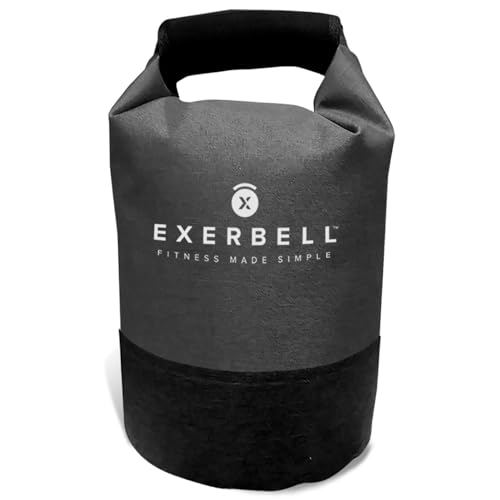
This is a different tool wearing the same category label, and it is the answer for the tightest spaces in this roundup. Exerbell says it folds flat into a drawer, closet or carry-on, weighs 1.1 lb empty and fills with water up to 22 lb or sand up to 30 lb, with internal markings for hitting a target load. The published empty weight is 1.14 lb, and the shell measures 12 x 9 x 8 in in use.
Water is the interesting part. You fill it at the tap, train, then empty it into the sink, which means it takes up almost no space and almost no weight between sessions. Exerbell describes a soft fabric exterior that protects wood floors and cuts noise, which matters if you train above a neighbour. The kettlebell grip suits swings, snatches and goblet squats rather than shoulder carries.
The ceiling is the catch. A 30 lb maximum is under half what the Yes4All and Taeku shells hold, and it sits in the most expensive tier here. It is also the slowest seller of the five by a wide margin. Buy it as a travel and apartment tool, not as your only bag.
Pros:
- Folds flat for drawer or carry-on storage
- 1.14 lb empty, lightest pick in the set
- Fills with water or sand, internal fill markings
- Soft exterior claim for floor protection and lower noise
Cons:
- 30 lb sand ceiling, lowest capacity here
- Premium price for the least loading capacity
- Single grip position, no shoulder-carry handles
- Slowest seller of the five in this set
5. Octane Flex Adjustable Sandbags for Fitness 75lb — Best budget pick
The cheapest of the five, and the only one that bundles three 25 lb filler bags with a printed exercise poster.

Best for: a first sandbag with the filler bags included Skip it if: you want published specifications before you commit
If you have never trained with sand and you want the lowest-risk entry, this is it. Octane Flex says the set includes three 25 lb filler bags for a 25 to 75 lb range, that the shell is 1050D nylon, and that a sandbag exercise poster comes in the box covering squats, deadlifts and over-the-shoulder throws. For a first-timer, that poster does more work than another 200D of fabric.
The problem is how little the listing publishes. Colour is the only specification given: no dimensions, no empty weight, no warranty, no handle count. You know the shell is black and that it has handles, and that is it. Every other pick in this comparison tells you at least its empty weight. That makes storage planning guesswork, which is exactly the wrong footing when space is the constraint.
It also sells far more slowly than the Yes4All, Taeku or RDX shells. The trade against the winner is straightforward: you save money and get filler bags included, and you give up every published figure you would use to compare it.
Pros:
- Cheapest of the five picks here
- Three 25 lb filler bags included in the box
- 1050D nylon shell claim
- Printed exercise poster for beginners
Cons:
- Only one published specification, the colour
- No dimensions or empty weight for storage planning
- No stated warranty
- Slow seller compared with the top three shells
Does a sandbag actually work in a small space?
Yes, with one condition attached, and it is not the one most buyers expect.
A sandbag's stored footprint is not the shell. It is the shell plus the sand. Once you have 50 lb of filler in the house, that sand lives somewhere whether it is inside the bag or in a bucket beside it. So the real question for a small room is not "how flat does this fold" but "where do 50 pounds of sand sit when I'm not training".
That splits this group cleanly:
- Sand-filled shells need floor or shelf space for the filled bag, permanently. The Yes4All parks in a 4.33 x 10.2 x 10.2 in block. The Taeku needs 25.6 in of length.
- The water option empties into a sink. The Exerbell is the only pick here that genuinely disappears between sessions, because 22 lb of its load goes down the drain.
Also worth planning for: ceiling height. Overhead presses and over-the-shoulder throws need clearance a squat does not. A shorter shell like the Yes4All gives you more headroom on a press than a 25.6 in bag does.
If your constraint is floor area, buy the smallest published footprint. If your constraint is storage volume, buy water.
How many handles do you really need?
Handle count is the specification I would compare first, ahead of fabric denier, and it is the one most listings bury.
Handles decide which exercises exist for you. A bag with two grips does deadlifts and rows. A bag with seven or eight does bear hugs, shoulder carries, rotational work, cleans and presses too. That is a wider training range from the same sand.
Here is how the set stacks up:
- 8 handles — RDX, the highest count here
- 7 handles — Yes4All, rubber, positioned for carries and hugs
- 6 handles — Taeku, reinforced for multiple grip positions
- Kettlebell grip — Exerbell, one position, built for swings
- Not listed — Octane Flex
The practical cutoff is six. Below that you lose the shoulder-carry grip, which is where a sandbag beats a dumbbell. Above six you are buying grip variety rather than necessity, so the jump from seven to eight matters less than the jump from four to six.
One thing to check on any bag: whether the handles are stitched into the shell seam or sewn onto the face panel. Seam-mounted handles carry load into the whole bag. Face-mounted ones concentrate it on the stitch line. No listing in this set states which, so inspect yours on arrival.
What the sandbag listings leave out
Four things you will not find on any of these five pages, and how to work around each.
Sand type and volume. None of these listings tells you how much sand fills the bag, only what it weighs. Play sand and mason sand pack at different densities, so the same filler bag holds different weights. Fill to roughly 80% of capacity, as Yes4All advises, so the sand can shift and the bag stays huggable.
Whether filler bags are included. The Taeku and Octane Flex sets state three inserts each. The Yes4All and RDX pages describe unfilled inner bags without a firm count. Read the listing again before you buy a bucket of sand.
Handle stitching method. Covered above. Not published anywhere here.
Zipper position under load. The Yes4All and Taeku both describe backup closures behind the zip, hook-and-loop on one and four fastening buttons on the other. That secondary layer is what keeps grit off your floor when you drop the bag on a corner. The other three listings say less about it.
The pattern is simple. The picks that publish the most, the Yes4All and the Taeku, are the ones you can plan around. The picks that publish least are the ones you inspect on arrival.
Filling, storing and living with one
Filling a sandbag takes about fifteen minutes and one decision you should get right first time.
- Buy sand dry. Damp sand adds weight that leaves as it dries, so your 50 lb bag drifts lighter over a month.
- Double-bag your filler. Most inner bags here are single-layer. A cheap zip bag inside each insert is the difference between a small leak and a carpet problem.
- Weigh each insert on a bathroom scale before it goes in. Guessing means you never know what you actually lifted.
- Fill to about 80%. A slack bag conforms to your shoulder. A packed one is a rigid log.
- Store it off the floor if you can. Compact shells like the Yes4All fit a shelf. Long ones like the Taeku usually do not.
Cleaning is easier than you would think. Every shell here is described as water-resistant or coated, so a damp cloth handles chalk and sweat. Do not put a filled bag in a washing machine, ever.
One habit worth building: check the seams monthly at the handle roots and the closure corners. Those are the two places load concentrates, and a stitch popping there is your early warning before a full failure.
The verdict
Three tiers, three different right answers.
At the entry end, the Octane Flex Adjustable Sandbags for Fitness 75lb is the cheapest way into the category and it includes three 25 lb filler bags plus a training poster, so you can start the same afternoon. You accept that colour is the only figure the listing publishes, which means storage is guesswork.
In the middle, the Yes4All Sandbags for Working Out is the pick I would default to and the best adjustable sandbag for small spaces overall. It is the only one here publishing dimensions, empty weight, warranty and release year together: 4.33 x 10.2 x 10.2 in, 2.65 lb, one year of cover, seven rubber handles. That combination of a compact stored block and a broad grip layout is what makes it work in a room where gear has to earn its floor space. The Taeku Fitness Sandbag with Handles is close behind and cheaper, and its exact advantage is length: 25.6 in of shell that sits properly across both shoulders, if you have the two feet of storage to give it.
At the premium end you are choosing between reach and disappearance. The RDX Sandbag for Fitness Weights Training claims 1200D Cordura, eight handles and a 5 to 200 lb design range. The Exerbell Foldable Adjustable Kettlebell Water Sandbag folds flat at 1.14 lb and empties into a sink, capped at 30 lb.
FAQ
Is the best adjustable sandbag for small spaces worth it over dumbbells?
The best adjustable sandbag for small spaces is worth it if your priority is stored footprint. A single Yes4All shell parks in a 4.33 x 10.2 x 10.2 in block and covers a 25 to 75 lb range, which would take four or five fixed dumbbells to match. Sand also shifts as you move, adding stability demand a rigid weight does not.
Which is better, the Yes4All or the Taeku sandbag?
Which is better depends entirely on your storage. The Yes4All wins on compactness and grip variety: 4.33 x 10.2 x 10.2 in stored, seven rubber handles, plus a published release year. The Taeku wins on shoulder carries with its 25.6 in shell and three included filler bags, and it costs less. Short storage gap, take the Yes4All. Long floor space, take the Taeku.
How much sand do I need to fill one of these bags?
How much sand you need depends on the filler bags supplied. The Taeku and Octane Flex sets both list three inserts, and Octane Flex rates its three at 25 lb each for a 75 lb total. Buy dry sand, weigh each insert on a bathroom scale, and fill to roughly 80% of capacity so the bag still conforms to your shoulder.
Can I use water instead of sand in an adjustable sandbag?
You can use water instead of sand only in a bag built for it. The Exerbell is the one pick here designed both ways: Exerbell claims up to 22 lb of water or up to 30 lb of sand, with internal markings for hitting a target. Water empties into a sink after training, so nothing heavy stays in the room.
What is the most common mistake buying an adjustable sandbag?
The most common mistake is buying on price and shell fabric while ignoring handle count and stored dimensions. A four-handle bag cannot do shoulder carries, and a 25.6 in shell will not fit a narrow shelf. Two picks here publish almost no measurements at all, which makes planning around them impossible before the box arrives.
Start with your storage tape measure, not your budget. Measure the gap where the bag will actually live, then match it against the published dimensions in the table above, because those figures are the only ones that will not change when you get the thing home. If your gap is under a foot, the Yes4All is the straightforward answer: it is the only pick here that pairs a small stored block with seven handles and a stated warranty, which means you get the widest exercise menu from the smallest permanent footprint. Fill it to 80%, weigh your inserts, and check the seams monthly.