Best Cork Yoga Mats by Thickness and Grip for Mat Recovery

Seven cork mats compared on thickness, weight, and warranty, with a clear winner for gentle recovery work and three flips for when the winner is wrong.

By Lauren RossUpdated 20 min read
On this page
- Best cork yoga mat for recovery at a glance
- Who this guide is not for
- 1. Gaiam Cork Yoga Mat — Best overall
- 2. StrongTek Cork Yoga Mat — Runner-up
- 3. Hatha Yoga Extra Large Natural Cork Yoga Mat — Best premium
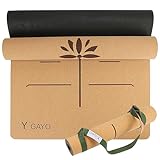
- 4. Y O Gayo Premium Yoga Cork Mat — Best upgrade
- 5. VYRUCLYZ Cork Yoga Mat — Best for pros
- 6. LILXIU Foldable Cork Yoga Mat — Best minimal setup
- 7. FORZA Yoga Complete Cork Bundle — Most versatile
- Does cork actually help recovery?
- How I cut a longer list down to seven
- Thickness, weight, and grip: what really decides it
- How to read a cork mat listing without getting fooled
- Gaiam vs StrongTek: which recovery mat wins?
- The verdict
- FAQ
The best cork yoga mat for recovery is the Gaiam Cork Yoga Mat, a 0.2 x 68 x 24 in standard-length mat that weighs only 2 lb and carries a lifetime warranty from the brand. If you want more cushion under the knees and wrists during long recovery holds, the StrongTek Cork Yoga Mat steps up to a 7 mm TPE base on a 72 x 24 in surface without adding much weight. A best cork yoga mat for recovery has to grip when damp and stay flat when you're not moving on it, and this shortlist is built around those two jobs.
Best cork yoga mat for recovery at a glance
| Pick | Thickness | Weight | Price |
|---|---|---|---|
Best overall Gaiam Cork Yoga Mat |
0.2 in | 2 lb | Check Price |
Runner-up StrongTek Cork Yoga Mat |
7 mm claim | 2.2 lb | Check Price |
Best premium Hatha Yoga Extra Large Cork Mat |
1/2 in | 7 lb | Check Price |
Best upgrade Y O Gayo Premium Cork Mat |
0.16 in | 8.35 lb | Check Price |
Best for pros VYRUCLYZ Cork Yoga Mat |
6 mm claim | 1.3 lb | Check Price |
Best minimal setup LILXIU Foldable Cork Yoga Mat |
4 mm claim | 1.98 lb | Check Price |
Most versatile FORZA Yoga Complete Cork Bundle |
not listed | not listed | Check Price |




Who this guide is not for
If you already own a dense rubber mat and lie on it for post-workout stretching without slipping, cork will not fix a problem you don't have. Cork earns its place in a recovery setup for two specific reasons: it wicks moisture instead of glazing over when your palms get damp, and it feels warmer under bare skin than an open-cell rubber surface. Neither is life-changing on its own.
You should also step away from this shortlist if you need a genuine therapy pad for back work on the floor. Half an inch is the deepest cushion in the whole set, from the Hatha Yoga Extra Large Cork Mat at 0.5 x 72 x 48 in. That's plenty for a supported bridge or a long child's pose, but it is not a Pilates reformer mat and it is not a physio table. Buyers who need real spine support should look at dedicated exercise mats in the 15 mm range, not cork.
One more warning. The word "recovery" appears in one product name in this shortlist, the FORZA Yoga Complete Cork Bundle, and its listing frames it as a mobility set rather than a therapeutic device. Nothing here is a medical product. This is a best cork yoga mat for recovery guide in the sense of gentle post-training work, floor stretching, and mobility flows. Treat it that way.
1. Gaiam Cork Yoga Mat — Best overall
The Gaiam Cork Yoga Mat wins because it pairs a genuine natural cork top with the only lifetime warranty in the entire shortlist, at the lowest price position of the seven.
Best for: gentle recovery flows in a home studio Skip it if: you need a thicker cushion for kneeling work
Two numbers make the case. The Gaiam is 0.2 x 68 x 24 in and weighs 2 lb, so it rolls thin and lifts with one hand. And the warranty line reads "Lifetime Warranty" on the listing, which no other mat in this shortlist matches. FORZA publishes a 12 Month Warranty; the other five publish nothing. For a mat you'll unroll several times a week for stretching and mobility, that written commitment matters more than an extra millimetre of cushion.
The listing describes a natural cork top over an eco-friendly TPE bottom, and calls out that "as temperatures rise and the cork begins to loosen it will become softer and easier to grip when slightly damp." That's the recovery-friendly behaviour cork is chosen for. Gaiam also says the surface is "moisture-proof and odor-free," which is the manufacturer's claim rather than a lab number.
The trade-off is real and worth naming. At 68 in, it's four inches shorter than every other mat in this shortlist, which all sit at 72 in. If you're over 5 ft 8 in and lie fully extended for savasana, your heels will hang off. The Gaiam is also the thinnest here, tied with two others at 0.2 in, so heavy kneeling wants a folded towel on top.
Pros:
- Only lifetime warranty in the shortlist
- Lightest full-cork mat here at 2 lb
- Natural cork over TPE bottom construction
- The one buyers choose most often in this set
- Lowest price position of the seven
Cons:
- Shortest mat at 68 in
- Thin at 0.2 in for heavy kneeling
- Standard 24 in width, not extra wide
2. StrongTek Cork Yoga Mat — Runner-up
The StrongTek gives you noticeably more cushion than the Gaiam without giving up portability, which is why it's the mat to size up to if 0.2 in feels thin.

Best for: commuters who want more cushion than a 0.2 in mat Skip it if: you want a published warranty
StrongTek's listing calls out a "7 mm TPE base" that "provides balanced cushioning for sensitive knees, wrists, and elbows during kneeling poses, planks, and floor" work. That's the claim; the published dimensions on the same listing round to 0.2 x 72 x 24 in, so treat the 7 mm as the manufacturer's own thickness measurement rather than a standardised figure. Either way, the mat weighs 2.2 lb, so you gain cushion for only 0.2 lb over the Gaiam.
The listing also mentions a carry strap included in the package, which the Gaiam and the LILXIU do not publish. For a mat you take to a class rather than leave rolled in a corner, that's a small convenience that matters more than a marketing bullet. StrongTek's model number is TPE-4K if you're cross-checking.
What StrongTek does not publish is any warranty. Compared with Gaiam's lifetime line, that's the specific trade-off you accept for the thicker cushion. The mat also lands mid-range in price for this set, so you're paying more than the Gaiam without the paperwork.
Pros:
- Thicker cushion claim than the Gaiam
- Carry strap called out on the listing
- Still light at 2.2 lb
- Full 72 x 24 in surface
- Cork over TPE dual layer
Cons:
- No published warranty
- Mid price position, no headline advantage over the winner
- Thickness given as a claim, not a standardised figure
3. Hatha Yoga Extra Large Natural Cork Yoga Mat — Best premium
The Hatha Yoga is the only mat here that goes wider than 26 in and thicker than a quarter inch, which is why tall practitioners and long floor stretches belong on this one.

Best for: tall practitioners who sprawl during floor work Skip it if: you carry the mat to a class
The dimensions do the talking. Hatha Yoga publishes 0.5 x 72 x 48 in, so this is a 6 ft by 4 ft slab, twice the width of every other mat in the shortlist. The listing says "Portuguese cork and high-quality TPE" for the construction, and calls out the 1/2 in thickness "for outstanding cushioning and resilience to protect your joints." For long supine holds and mobility work where your arms stretch out sideways, that width is the whole point.
The cost, and it's the reason this is not the overall winner, is 7 lb of mat. That's more than three times the weight of the Gaiam. It also sits at the top price position in this shortlist. Nobody carries this to a studio; this is a mat that lives in one spot in your house and gets unrolled every time you use it.
Hatha Yoga also does not publish a warranty on this listing, which is a real gap at the premium price position. If a written warranty matters more than surface area, the Gaiam and its lifetime line remain the safer buy.
Pros:
- Widest surface here at 48 in
- Deepest cushion at 1/2 in
- Portuguese cork noted on the listing
- Full 72 in length
Cons:
- Heaviest full mat at 7 lb
- Most expensive full-mat pick here
- No published warranty
- Not portable
4. Y O Gayo Premium Yoga Cork Mat — Best upgrade
The Y O Gayo is the heaviest single mat in the shortlist, and that weight is exactly what earns its place: a mat that will not travel across the floor when you push into it.

Best for: heavier practitioners who want a mat that stays put Skip it if: you need a mat that fits in a standard sling
At 8.35 lb across a 72 x 26 in footprint, this is a mat with mass. Y O Gayo's listing says "heavier construction and dense thickness help the mat stay firmly in place; rolls out flat every time." That behaviour is worth paying attention to for recovery work, because a mat that creeps during a hip opener is a mat that pulls you out of the pose. The published thickness is 0.16 in, so this earns its cushion feel through density rather than height.
The extra 2 in of width over a standard mat is a small thing that matters. During a supine twist, your knees can drop right without leaving the surface, and during pigeon your rear foot has somewhere to go. Alignment lines are printed on the surface to help with placement. The listing calls the base "natural tree rubber," which is a different material story from the TPE bases on most of the shortlist.
The obvious trade-off is portability. At 8.35 lb, this is not a mat you sling over a shoulder to walk to a class. Y O Gayo also publishes no warranty, so the paperwork lags the Gaiam.
Pros:
- 26 in width beats a standard 24 in mat
- Dense build keeps the mat flat
- Alignment lines printed on the surface
- Natural rubber base rather than TPE
Cons:
- 8.35 lb is not portable
- No published warranty
- Premium price position for a thin published thickness
5. VYRUCLYZ Cork Yoga Mat — Best for pros
The VYRUCLYZ trades weight for thickness in a way experienced practitioners will appreciate: at 1.3 lb it's the lightest mat here, with a claimed 6 mm build.

Best for: experienced flows on alignment lines Skip it if: you want a heavier, more grounded feel
VYRUCLYZ publishes a weight of 1.3 lb over 72.05 x 24.02 x 0.2 in, and the listing repeatedly calls out "ergonomic 6mm thickness" for shock absorption. As with StrongTek, the millimetre figure is the manufacturer's claim while the published Amazon dimension rounds to 0.2 in, so take the 6 mm as a listing claim rather than a lab number. The construction is described as a cork top over a "high-density natural rubber bottom."
Two features move this pick toward experienced users. The listing includes "integrated subtle alignment lines" for posture guidance, which help when you're layering restorative work on top of a technical practice. And the low weight makes it genuinely portable, so a physical therapist or a private instructor can carry it in a bag without noticing it.
The catch is the same one that comes with lightness in general: a 1.3 lb mat is easier to shift under you than an 8.35 lb Y O Gayo. If you push hard into your hands during a supported forward fold and the mat starts to migrate, you'll want a heavier pick. No warranty is published, which continues the pattern for this shortlist outside the Gaiam and FORZA.
Pros:
- Lightest mat in the shortlist at 1.3 lb
- Alignment lines printed on the surface
- Natural rubber base, not TPE
- Full 72 x 24 in surface
Cons:
- Lightness can mean movement under load
- No published warranty
- Thickness given as a claim, not standardised
6. LILXIU Foldable Cork Yoga Mat — Best minimal setup
The LILXIU is the only mat here that folds instead of rolling, and it ships with a zippered canvas storage bag, which makes it the shortlist's travel pick.

Best for: travellers who fold, not roll Skip it if: you want maximum joint cushion
LILXIU publishes 72 x 24 in over a 0.15 x 72 x 24 in dimension line and calls the build "4mm thickness" in its listing text. The top is described as "0.4 mm natural cork" over a rubber base. Weight is 1.98 lb, which is close to the Gaiam. What separates this pick is the foldable construction and the canvas bag, both called out by the manufacturer.
For a recovery kit that lives in a suitcase, that fold matters. Rolled mats need a strap and eat awkward space in a bag; a folded mat drops flat into a suitcase alongside clothes. If you travel for work and want to keep a mobility practice on the road, this is the mat that packs.
The trade-offs. LILXIU publishes no warranty. And a mat that folds tends to crease where it folds, so if you set it down on a hotel-room carpet the crease lines will show for the first few minutes. It's also the thinnest published mat in the shortlist at 0.15 in on the dimension line, so treat the 4 mm as a listing claim.
Pros:
- Folds flat for a suitcase
- Zippered canvas storage bag included
- Light at 1.98 lb
- Full 72 x 24 in surface
Cons:
- Fold creases show at first
- No published warranty
- Thinnest published dimension in this shortlist
7. FORZA Yoga Complete Cork Bundle — Most versatile
FORZA is the only pick here that isn't just a mat, and if you're building a home recovery corner from scratch it saves you six separate decisions.

Best for: a first home recovery kit in one purchase Skip it if: you only need a mat
The bundle brings a cork mat, a yoga wheel, a foam roller, a massage ball and blocks, all with cork surfaces, per FORZA's listing. The mat itself sits at 0.2 x 72 x 26 in, so it matches the wider Y O Gayo footprint. FORZA describes "an anti-slip natural rubber base" on the mat and says the accessories are made from "dense, fine-grain cork." A 12 Month Warranty is published, which is the only warranty in the shortlist besides the Gaiam.
The reason to consider this instead of a mat alone is a practical one. A yoga wheel supports thoracic mobility work, a roller handles calf and IT band tightness, and blocks turn a stiff forward fold into a workable one. Buying those pieces separately means picking three or four brands, and cork versions of any of them are not the default. Getting them together avoids that hunt.
The trade-off is honest: this is the most expensive pick in the shortlist, and the buyer who already owns blocks or a foam roller is paying twice. The mat's individual specifications are also not published in as much detail as the Gaiam or the StrongTek; there's no separate weight for the mat within the bundle.
Pros:
- Full recovery kit in one purchase
- 12 Month Warranty published
- 26 in width on the mat
- Cork throughout the accessories
Cons:
- Highest price position in the set
- No mat weight published separately
- The slowest seller of the seven
Does cork actually help recovery?
Cork's real contribution to a recovery practice is grip when your skin is damp. Most rubber and TPE surfaces get more slippery as you sweat, and Gaiam's own listing puts it plainly: "as temperatures rise and the cork begins to loosen it will become softer and easier to grip when slightly damp." StrongTek says its cork "gains traction as moisture builds." Hatha Yoga says cork "becomes more grippy as you sweat." Three brands describe the same behaviour.
For recovery specifically, that matters because gentle mobility work often runs long. Ten minutes in a supported bridge or a low lunge gives your palms and forearms time to warm the mat, and cork holds where synthetic doesn't. Cork is also warmer under bare skin than plain rubber, so lying down for a body scan feels less like lying on a floor.
What cork does not do:
- Replace physiotherapy for a real injury
- Add measurable joint cushion beyond its published thickness
- Make a thin mat feel like a thick one
There is also a hygiene angle worth naming. Every listing in this shortlist describes cork as easy to wipe down with a damp cloth or mild soap and water, and Gaiam calls its surface "moisture-proof and odor-free." Those are manufacturer claims, not lab measurements, but they line up across the set: cork does not need the aggressive cleaning routine that open-cell rubber does. For a mat you'll use daily during a recovery block, that's less friction between "I should stretch" and actually doing it.
How I cut a longer list down to seven
The screening was straightforward. Start with cork-topped mats in the Yoga > Mats category, plus one relevant Balance Trainers > Foam Rollers listing for buyers who want a full recovery kit. Cut anything without a published dimension line, because a recovery mat you cannot check against a body dimension is a mat you cannot recommend for recovery. Cut listings that publish only a single feature bullet and no specifications, since there is nothing to compare.
Three specific reasons picks were dropped before this shortlist:
- No published thickness. A recovery buyer needs at least a thickness figure to know whether kneeling will hurt.
- No published dimensions in inches or millimetres. Marketing text like "large size" is useless when the buyer is 6 ft 2 in.
- Mixed materials with no cork on the practice surface. A mat with a cork pattern printed on TPE is not a cork mat.
Seven listings survived, and they cover the meaningful price and thickness range. The lightest is 1.3 lb, the heaviest 8.35 lb; the smallest is 68 x 24 in, the largest 72 x 48 in; the thinnest published dimension is 0.15 in and the deepest is 0.5 in. That's enough spread to match the shortlist to a body and a room.
Thickness, weight, and grip: what really decides it
Most cork mat guides compare colour and alignment lines. That's not what decides it. For recovery work specifically, three specifications matter in this order.
Thickness under the joints. If you spend real time in kneeling positions or seated forward folds, look for a published thickness above 0.2 in. Only the Hatha Yoga at 0.5 in clears that comfortably in this shortlist. Everyone else sits between 0.15 and 0.2 in on the dimension line, with 4 to 7 mm figures given as manufacturer claims in the feature text.
Weight and stability. Heavier mats stay put. Lighter mats travel with you. The shortlist runs from the VYRUCLYZ at 1.3 lb to the Y O Gayo at 8.35 lb, and the two ends want different buyers. A mat that lives at home should lean heavy; a mat that moves should lean light.
Grip surface area. Every mat in this shortlist uses natural cork on the practice side, so the material grip question is the same across the set. What varies is the surface area you have to work on. Five mats give you 72 x 24 in, two give you 72 x 26 in, one gives you 72 x 48 in, and one gives you 68 x 24 in. If you're taller than 5 ft 8 in, cross the 68 in Gaiam off unless you don't mind heels off the edge in savasana.
Two secondary points to weigh: warranty and included extras. Only Gaiam publishes a lifetime warranty; only FORZA publishes anything else. LILXIU includes a storage bag, StrongTek includes a carry strap, and FORZA includes a full accessory kit.
How to read a cork mat listing without getting fooled
Cork mat listings mix three kinds of numbers, and confusing them is how buyers end up disappointed. Here's the trick with cork listings.
The published dimension line is the reliable one. It's the size and thickness Amazon shows in the product overview, and it's what the seller is on the hook for. In this shortlist those lines run 0.15 to 0.5 in for thickness.
The feature bullet millimetre claim is the manufacturer's own measurement, sometimes taken differently. StrongTek's listing pairs "7 mm TPE base" with a 0.2 in overall dimension, so the 7 mm is the base layer rather than the full stack. VYRUCLYZ pairs "6mm" with the same 0.2 in overall dimension. LILXIU says "4mm" with a 0.15 in overall. Read both figures, and trust the dimension line for the total.
The material line matters more than most buyers think. Cork over TPE (Gaiam, Hatha Yoga, StrongTek) is the common combination and is described as eco-friendly in every listing. Cork over natural rubber (Y O Gayo, VYRUCLYZ) is heavier, denser and often stickier. Cork over an unspecified base is a warning; ask before you buy.
A quick checklist for a cork mat listing:
- Confirm the length in inches, not "standard" or "large"
- Read the dimension line first, then the feature bullets
- Check whether cork is on the top only, or both sides
- Look for a warranty; most cork mats don't publish one
- Note the weight, because a 1.3 lb mat and an 8.35 lb mat behave differently
Gaiam vs StrongTek: which recovery mat wins?
These two are the closest fight in the shortlist, and the choice comes down to one question: how much time will you spend on your knees?
Gaiam wins on paperwork and price. The lifetime warranty is the only one of its kind here, and the mat sits at the lowest price position in the set. The construction is natural cork over TPE, weight is 2 lb, and the model number for cross-checking is 05-62904. The mat is 68 x 24 in, four inches shorter than the StrongTek.
StrongTek wins on cushion and length. The listing claims a 7 mm TPE base, which is thicker than what Gaiam publishes at 0.2 in overall. Length is a full 72 in, and a carry strap is called out. Weight is only 2.2 lb, so the cushion costs almost nothing in portability. Price sits mid-range for the set.
If your recovery block is mostly supine and seated, Gaiam. If it involves lots of low lunges, tabletop and quadruped work, StrongTek. The cutoff is straightforward: if kneeling for two minutes on the Gaiam is already uncomfortable, the extra millimetres on the StrongTek are worth trading the warranty for.
The verdict
The Gaiam Cork Yoga Mat is the right default for the best cork yoga mat for recovery, because it combines a genuine natural cork top, a 2 lb weight, and the only lifetime warranty in the shortlist at the lowest price position of the seven. For a mat that will unroll several times a week and outlast a phase of your practice, that written commitment does more than an extra millimetre.
Two named conditions flip that recommendation. If you're taller than 5 ft 8 in or you spend real time on your knees, the StrongTek Cork Yoga Mat is the better buy, because it stretches the surface to 72 x 24 in and adds cushion for only 0.2 lb of extra weight. If you're building a home recovery corner from scratch and you don't already own blocks or a foam roller, the FORZA Yoga Complete Cork Bundle saves you separate decisions and comes with a published 12 Month Warranty.
The rest of the shortlist covers the edges. The Hatha Yoga extra-large mat for tall practitioners who sprawl, the Y O Gayo for those who want a mat that will not budge, the VYRUCLYZ for a very light 1.3 lb pack, the LILXIU for a mat that folds into a suitcase. Match the specifications to your body and your room, not to the marketing text.
FAQ
Is a cork yoga mat worth it for recovery work specifically?
A cork yoga mat is worth it for recovery work if you value grip that improves as your palms warm up, and a surface that wipes clean easily. Every listing in this shortlist calls out cork's tendency to grip better when slightly damp. That's the specific benefit; cork does not add joint cushion beyond its published thickness, so pair it with the right thickness for your practice.
How thick should a cork yoga mat be for kneeling and floor recovery?
How thick a cork yoga mat should be depends on how long you kneel. For short holds, 0.2 in is enough, and five mats in this shortlist sit there. For long recovery holds and repeated tabletop work, look above 0.2 in on the dimension line. Only the Hatha Yoga at 0.5 in and the claimed builds on the StrongTek at 7 mm and VYRUCLYZ at 6 mm push past that comfortably.
Which is more slip-resistant, the Gaiam or the Y O Gayo?
Which is more slip-resistant depends less on the cork and more on the base. Gaiam pairs cork with a TPE bottom on a 2 lb mat, while Y O Gayo pairs cork with a natural rubber base on an 8.35 lb mat. Y O Gayo's listing says "heavier construction and dense thickness help the mat stay firmly in place." For a mat that will not travel across the floor, Y O Gayo has the advantage.
Is the best cork yoga mat for recovery always the thickest one?
The best cork yoga mat for recovery is not always the thickest one. Thickness helps kneeling and floor work, but past half an inch a mat starts to feel unstable in standing poses because your foot sinks into it. The Hatha Yoga at 0.5 in is the deepest in this shortlist, and it's specifically a floor-work pick. For a mixed practice, 0.2 in with a dense base is often the better answer.
What's the difference between a TPE base and a natural rubber base?
The difference between a TPE base and a natural rubber base is weight, feel and marketing. TPE is lighter and typically labelled eco-friendly, which is what Gaiam, StrongTek and Hatha Yoga use. Natural rubber is heavier and denser, which is what Y O Gayo and VYRUCLYZ use. Rubber tends to hold the floor better; TPE tends to travel better. Pick the base for how the mat will be used, not the marketing.
Start with the Gaiam if you want the safest default, and only step up if a specific condition flips the choice: your height, your kneeling time, or your recovery kit. The specifications in this shortlist give you enough to match a mat to a body without guessing, and the Gaiam's lifetime warranty is the one line no other seller in the set will match. A cork mat is not a piece of medical equipment, and treating it as one is how buyers overpay. Treat it as a grippier, warmer floor for the work you already know you should be doing, and let the specifications, not the copy, decide which one lands in your home.