Best Portable Gym Flooring for Small Spaces: ProsourceFit Wins
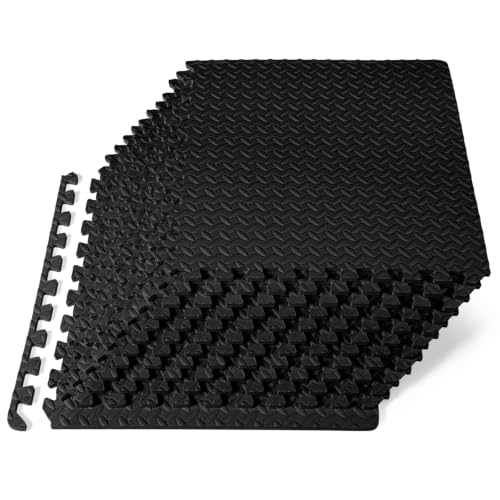
Six interlocking and folding sets ranked for tight rooms. Which portable gym flooring actually breaks down fast, stores flat, and survives dumbbells without gouging the floor underneath?

By Lauren RossUpdated 17 min read
On this page
- Who this guide is not for
- Best portable gym flooring for small spaces at a glance
- How I narrowed six sets from the category
- 1. ProsourceFit Exercise Puzzle Mat ½-inch — Best overall
- 2. AIRHOP 0.56in Thick 48 Sq Ft Exercise Equipment Mats — Best premium
- 3. Our Modern Space 24 Pack — Runner-up
- 4. Nazhura 16 Pack 64 sqft Home Gym Mat — Best minimal setup
- 5. bemaxx Gym Mats Set — Best budget pick
- 6. Garvee Gymnastics Mat — Best for pros
- Does interlocking foam really work in small spaces?
- Foam, rubber-topped or folding: which shape fits your room?
- What the listings do not tell you
- How much coverage do you actually need?
- The verdict
- FAQ
The best portable gym flooring for small spaces is the ProsourceFit Exercise Puzzle Mat ½-inch, a 12-tile EVA set covering 48 sq ft at 24 x 24 in per tile, light enough at 9.3 lb to pack away in minutes and backed by a limited lifetime warranty. If your room is longer than it is wide and you want continuous cushion end to end, the Our Modern Space 24-pack doubles the coverage to 96 sq ft in the same 24 x 24 in module.
Who this guide is not for
Not every home gym problem is a flooring problem. If you drop a loaded barbell from waist height, no product on this list is what you want under it. Dedicated lifting platforms with a plywood core and stall mat surround are a different category, and you should shop for one directly.
You should also stop here if any of the following apply:
- Your floor is already commercial-grade rubber or a sprung studio surface.
- You want a permanent glued-down installation rather than something you break down and store.
- You need certification for a specific sport, like competition mats for judo or wrestling.
Portable gym flooring is a compromise. It cushions joints, dampens sound, and protects the surface underneath from equipment scratches. It is a great compromise for bodyweight training, kettlebells at moderate weight, dumbbells, cardio machines, yoga, kids' play areas and general workout zones. It is a bad choice for anything that lands hard on a small footprint at high speed. Keep that split in mind as you read.
Best portable gym flooring for small spaces at a glance
| Pick | Coverage | Tile thickness | Price |
|---|---|---|---|
Best overall ProsourceFit Exercise Puzzle Mat ½-inch |
48 sq ft, 12 tiles | 0.5 in | Check Price |
Best premium AIRHOP Rubber-Top Exercise Mats |
48 sq ft, 12 tiles | 0.56 in | Check Price |
Runner-up Our Modern Space 24-Pack |
96 sq ft, 24 tiles | 0.5 in claim | Check Price |
Best minimal setup Nazhura 16-Pack Home Gym Mat |
64 sq ft, 16 tiles | 0.5 in claim | Check Price |
Best budget pick bemaxx Gym Mats Set |
18 sq ft, 18 tiles | 0.4 in | Check Price |
Best for pros Garvee 4-Fold Gymnastics Mat |
6.2 x 2 ft, 1 folding pad | 2 in | Check Price |


How I narrowed six sets from the category
I lined up listings under Accessories > Exercise Equipment Mats and adjacent training-mat categories and set the criteria before I looked at any specific product.
The weights and priorities I used:
- Portability, weighted highest, because the whole promise of portable gym flooring for small spaces is that it comes up as fast as it goes down. Interlocking EVA at 24 x 24 in tiles, and folding mats, both qualify. Rolled rubber and glued sheet did not.
- Small-space fit, weighted second. A tile module that lets you build 4x6, 6x8 or 8x8 rectangles matters more than raw square footage. Odd module sizes were penalised.
- Cushion for the joint types this floor actually sees: knees, wrists, elbows and dumbbell drops from waist height. Thickness figures had to be published in inches, not adjectives.
- Set completeness, meaning the pack includes end-border pieces so a floating tile edge does not curl.
Cuts I made from the shortlist:
- Any set below 0.4 in nominal thickness, which does not protect hardwood from a dumbbell corner.
- Any listing with no published tile dimensions.
- Any set priced in the premium band but with fewer published specifications than mid-band alternatives.
What survived is the six sets below. Five are interlocking EVA modules covering 18 to 96 sq ft. One is a folding tumbling mat, kept in the list because for some small-space buyers the right answer is not tiles at all.
1. ProsourceFit Exercise Puzzle Mat ½-inch — Best overall
The ProsourceFit set wins because it hits the useful middle: 48 sq ft of coverage in twelve 24 x 24 in tiles at 0.5 in thick, only 9.3 lb total, with a published limited lifetime warranty against manufacturer defects.
Best for: a 6x8 foot workout zone that has to disappear between sessions Skip it if: you drop loaded barbells and need a rubber top layer
Inside this set of six, ProsourceFit is the only pick that pairs the standard 24 x 24 in module with a published lifetime defect warranty. That is the single most useful line in the entire listing set, because interlocking EVA fails at the tabs before it fails in the middle, and a warranty on the tabs is what you actually want. Twelve tiles give you a 6 ft x 8 ft rectangle, which is the working size most people arrive at once they measure their actual workout footprint. The total weight of 9.3 lb divides across twelve pieces, so a single tile is light enough to lift with one hand while the vacuum runs underneath.
ProsourceFit says the foam is high-density EVA with no toxic phthalates, water-resistant and noise-reducing. Those are manufacturer claims, not measurements. Against this set, the honest trade-off is thickness: at 0.5 in it undercuts the 0.56 in AIRHOP top pick, and the top layer is foam rather than a rubber-EVA laminate. For dumbbell drops from waist height under about 40 lb it holds up; heavier than that, size up.
Pros:
- Standard 24 x 24 in module fits common room dimensions
- Full 48 sq ft coverage in twelve tiles
- Only 9.3 lb total, easy to move and store
- Published limited lifetime warranty on defects
- Includes end-border pieces for a finished edge
Cons:
- 0.5 in foam-only, no rubber top for heavy drops
- Foam compresses slightly under weight benches over time
- Colour and texture may vary between production runs
2. AIRHOP 0.56in Thick 48 Sq Ft Exercise Equipment Mats — Best premium
The AIRHOP set earns the premium slot on construction: a rubber top layer bonded to high-density EVA, 0.56 in thick, in the same 24 x 24 in module and same 48 sq ft footprint as the ProsourceFit winner.

Best for: heavier dumbbell work in a garage corner Skip it if: you need to move the floor often, since 29 lb is a lot to shuffle
AIRHOP is the only set here with a stated dual-layer build: recycled rubber top over EVA foam. That construction is what you want under a dumbbell rack or a rower with steel feet, because the rubber layer takes the direct point load and the foam underneath absorbs the vibration. The listing describes larger interlocking teeth than the standard puzzle cut, which is the specific failure mode that kills cheaper sets when you drag equipment across them.
The trade-off is mass. At 29 lb across twelve tiles, this set weighs more than three times what the ProsourceFit weighs for identical square footage, which is exactly what you would expect once rubber replaces air. That makes AIRHOP the wrong buy if the whole point is to break the floor down after every session, and the right buy if the floor lives in one spot for months at a stretch. It is also the most expensive pick in this set, and the slowest seller of the six, so buyers here are self-selecting for the heavier build.
Pros:
- Rubber top layer over EVA is the only dual-layer build in the set
- 0.56 in thick, the deepest of the interlocking picks
- 24 x 24 in tiles match the standard planning module
- Larger interlocking teeth resist separation under drag
- Same 48 sq ft coverage as the winner
Cons:
- 29 lb total is heavy to move between rooms
- The most expensive pick in this set
- No published warranty in the listing
3. Our Modern Space 24 Pack — Runner-up
Our Modern Space is the runner-up because it takes the same 24 x 24 in module and scales it to 96 sq ft, giving you a genuine 8x12 ft floor if the room allows it.

Best for: a longer room that needs 96 sq ft of continuous cushion Skip it if: storage space is tight, since 24 tiles stack tall
If the ProsourceFit set is the honest middle, this one is the honest upsize. Twenty-four tiles cover 96 sq ft, which is double the winner's footprint and enough to lay a real training strip end to end in a spare bedroom or a basement corner. The tiles are the same 24 x 24 in standard, so a full pack drops in as a 4x6 grid, a 3x8 grid, or a 2x12 strip depending on the room. The listing describes extra-thick, high-density EVA that is free from harmful chemicals, both of which are manufacturer claims rather than tested figures.
The trade-off, honestly, is documentation. Our Modern Space publishes fewer specifications than ProsourceFit or AIRHOP, and only one seller lists this set on the marketplace. There is no published warranty in the listing. If those things matter to you, ProsourceFit is still the safer buy at half the coverage. What Our Modern Space does uniquely well here is the pure square-footage question: no other pick in this set covers 96 sq ft in one purchase.
Pros:
- 96 sq ft in one pack, the largest coverage in the set
- Standard 24 x 24 in tile fits common planning grids
- Flexible layouts: 4x6, 3x8 or 2x12 configurations
- Listing states non-toxic EVA foam construction
Cons:
- Fewer published specifications than the winner
- No stated warranty in the listing
- Only one seller listed
- Stacks tall in storage compared to smaller packs
4. Nazhura 16 Pack 64 sqft Home Gym Mat — Best minimal setup
Nazhura earns the minimal setup pick because 16 tiles at 24 x 24 in build a clean 8x8 ft square in one pack, which is the shape most small rooms take once you push furniture back.

Best for: a renter who wants coverage down in one evening with zero tools Skip it if: you want a published warranty and a listed tile weight
Nazhura sits between the ProsourceFit 48 sq ft pack and the Our Modern Space 96 sq ft pack, at 64 sq ft across sixteen 24 x 24 in tiles. That is the exact footprint you get from an 8x8 ft square, which is the useful shortcut this set delivers: buy one pack, drop it edge to edge along two walls, and you are done. The listing describes puzzle-piece edges that connect without tools, a textured surface for grip, and high-density EVA construction.
Compared to the winner, Nazhura's honest trade-off is what the listing does not say. There is no published tile weight, no published warranty, and only one seller stocks it. The tile dimensions and count are stated clearly, which is enough to plan the layout, but you are buying on a shorter specification sheet than ProsourceFit gives you. Choose it when the 8x8 ft finished shape matters more than the paperwork behind it.
Pros:
- 64 sq ft builds a clean 8x8 ft square from one pack
- Standard 24 x 24 in module for easy planning
- Textured surface for foot grip during workouts
- Puzzle edges assemble without tools
Cons:
- No stated tile weight in the listing
- No published warranty
- Only one seller listed
- Fewer specifications than the winner
5. bemaxx Gym Mats Set — Best budget pick
bemaxx is the budget pick because it is the cheapest of the six and the only one built on a smaller 12.6 x 12.6 in module, which suits single-piece equipment better than a whole-room floor.

Best for: a single-user zone under a bike, rower or weight bench Skip it if: you plan to cover more than roughly 18 sq ft
bemaxx is the only pick in this set that uses a 12.6 x 12.6 in tile rather than a 24 x 24 in tile. Eighteen tiles cover about 18 sq ft, roughly a 3x6 ft strip, at 0.4 in thick and only 2.65 lb total. That is a specific-purpose set, not a room-sized set: it is the right shape to sit under a spin bike, a rowing machine, a folding treadmill or a bench, where you want a defined pad rather than a floor. It is also the fastest to reconfigure because the small tile lets you build irregular shapes without cutting.
The trade-off, plainly, is coverage. If you try to build an 8x8 ft floor from these you will connect a hundred and forty-four tabs, and every one of those tabs is a potential failure point over time. bemaxx also runs thinner at 0.4 in, so it protects flooring against equipment feet but is not deep enough for kneeling work. Buy it as the pad under one machine and it is a genuine bargain; try to make it a whole gym floor and you will regret the tile count.
Pros:
- Cheapest of the six
- Small 12.6 in tile suits equipment-sized pads
- Only 2.65 lb total, easiest to relocate
- Anti-slip surface described in the listing
- Includes edge pieces
Cons:
- 18 sq ft covers a strip, not a room
- 0.4 in is the thinnest of the interlocking picks
- Too many tabs when scaled to a large floor
6. Garvee Gymnastics Mat — Best for pros
The Garvee mat earns the specialist slot because it is the only folding pick in the group: a 6.2 x 2 ft, 2 in thick, four-fold mat that stores as a rectangle roughly 18 in wide.

Best for: tumbling, stretching and floor work in a narrow strip of room Skip it if: you want a hard, level surface for kettlebells or a squat rack
Garvee solves a different problem than the interlocking sets. It is not a floor. It is a folding pad you unroll for one activity, then fold and lean against a wall. The four-fold construction collapses to about a quarter of its unfolded length, which is why it lives happily in a closet or behind a sofa. Two inches of thickness is roughly four times what any of the EVA tiles here give you, which matters if the exercises are tumbling, back rolls, bridge holds or floor gymnastics rather than standing lifts.
The trade-off is honest and obvious. A folding mat cannot host equipment. Set a bench on it and the fold seams will crease under the feet; set a rack on it and you have introduced instability where you least want it. Garvee is also the slowest seller in this set, which fits its niche: most portable gym flooring buyers want a floor, not a pad. But if your small space is a hallway and your workout is a floor routine, Garvee stores in a way none of the tile sets can match.
Pros:
- 2 in thick, deepest cushion in the set
- Four-fold design stores flat behind furniture
- 6.2 x 2 ft opens fast, no assembly
- Only 6.28 lb, easy to carry
Cons:
- Not suitable under equipment
- Fold seams limit useful working area
- Leather-style surface is not machine-washable
Does interlocking foam really work in small spaces?
Interlocking foam works well in small spaces on one condition: you buy the tile size that matches your room, not the tile size that matches the biggest pack you can find.
The 24 x 24 in tile is the standard for a reason. Most home rooms measure out to whole feet along at least one wall, and 24 x 24 in gives you a grid that lines up with 8 ft, 10 ft, 12 ft walls without cutting. Five of the six picks here use it. That interoperability is quietly one of the biggest advantages of the format: a set from one brand will physically slot next to another, so you can expand later.
Where interlocking foam does not work is under equipment that concentrates weight on a small footprint. A dumbbell rack, a loaded barbell in the rack, or the front feet of a spin bike will compress 0.5 in foam over months and leave permanent divots. For that use case, choose the rubber-topped option, or place a hard board under the equipment feet.
Foam, rubber-topped or folding: which shape fits your room?
Three formats show up in this category, and they suit three different problems.
- Foam interlocking tiles (ProsourceFit, Our Modern Space, Nazhura, bemaxx): the default answer for a bodyweight and cardio zone, and the format that gives you the most layout flexibility.
- Rubber-topped interlocking tiles (AIRHOP): the answer when you have dumbbells, kettlebells or a rack that lives on the floor between sessions. Heavier to move, tougher on the top surface.
- Folding solid mats (Garvee): the answer when the floor itself is fine and what you need is a portable cushion for one activity, folded away between uses.
If your workout is under 40 lb of free weights, cardio and yoga, foam is right. If it is heavier or involves rack work, add rubber. If it is tumbling, stretching or floor gymnastics, buy a fold.
What the listings do not tell you
Three things the product pages do not spell out, that decide how happy you are six months in:
- Tab failure is what kills interlocking sets, not the middle of the tile. The teeth wear when you drag equipment sideways across them. Lift, do not drag.
- Off-gas smell fades in about a week for EVA foam, faster if you air the tiles before assembly. No listing here tells you that, but it is universal for the material.
- Foam takes an impression from concentrated loads. A weight bench with 1 in feet will leave visible depressions in 0.5 in foam. Not damage, but not invisible either. Wide-footprint equipment is kinder to the surface.
Two more small ones. Interlocking tiles slide fractionally under lateral loads like burpees or shuttle sprints; put the floor against two walls, not floating in the middle of a room. And a matte black floor shows dust more than a textured floor, so if you have pets, pick the textured surface.
How much coverage do you actually need?
Most buyers overshoot coverage and then run out of storage. The honest sizing rules:
- A single-user cardio or bodyweight zone: 6x6 ft is enough, which is nine 24 x 24 in tiles. The ProsourceFit set at 48 sq ft has a comfortable buffer.
- A cardio zone plus a stretching area: 6x8 ft, twelve tiles. That is what the winner and the AIRHOP set both cover, and it is the sweet spot for most small rooms.
- A full workout area including free weights and a mat area: 8x8 ft or bigger. That is the Nazhura 64 sq ft pack or the Our Modern Space 96 sq ft pack.
- A pad under one machine: 3x6 ft, which the bemaxx set handles cheaply.
A workable rule: measure the length of your longest movement (a broad jump, a plank, a rowing stroke) and add two feet in each direction. That is the smallest footprint you will regret.
The verdict
The best portable gym flooring for small spaces is the ProsourceFit Exercise Puzzle Mat ½-inch. It hits the useful centre of this set: 48 sq ft in twelve 24 x 24 in tiles, 0.5 in thick, 9.3 lb total, with a published limited lifetime warranty on defects. That combination is what you actually want for a 6x8 ft training zone that comes up between sessions.
Two conditions flip the recommendation. First, if your workout regularly involves dumbbells above roughly 40 lb or a rack that stays put, choose the AIRHOP 0.56 in Rubber Top set instead. The rubber layer is the specific upgrade that heavier loads need, and the 29 lb total tells you honestly that this is a floor that lives in one place.
Second, if your room is longer than 8 ft in either direction, go straight to the Our Modern Space 24-pack at 96 sq ft. Doubling the coverage in one purchase is worth trading the thinner specification sheet.
Everything else in the set has a narrower job. bemaxx sits under one machine. Nazhura builds an 8x8 ft square when that shape happens to match your room. Garvee is a folding pad for floor work and stores like no interlocking set can.
FAQ
How thick should portable gym flooring for small spaces be?
Thick portable gym flooring for small spaces should be at least 0.5 in for general home use, which four of the six picks here meet or exceed. Half an inch protects hardwood from dumbbell corners and cushions kneeling work. Go to 0.56 in like the AIRHOP set if you use free weights above roughly 40 lb. Below 0.4 in, foam is a floor protector, not a joint protector.
Is portable gym flooring worth it in a small apartment?
Portable gym flooring is worth it in a small apartment for three specific reasons: it lets you break the workout zone down between sessions, it dampens equipment noise for the neighbours below, and it protects a security deposit against dumbbell scratches. In a rented apartment those three benefits usually pay for a mid-band pack inside the first year, and the tiles carry to the next apartment.
Can I use interlocking foam under a treadmill or rower?
Can I use interlocking foam under a treadmill or rower: yes, with two caveats. Foam absorbs vibration well, which is what you want under both machines, and 0.5 in tiles handle the point loads of most home cardio machines. But heavy treadmills with narrow feet will compress the foam over months, leaving visible depressions. For those, the AIRHOP rubber-topped set is the safer buy.
ProsourceFit vs AIRHOP: which one should I choose?
ProsourceFit vs AIRHOP splits on weight and load. Choose the ProsourceFit set for bodyweight, cardio and light dumbbell work in a floor you break down often; 9.3 lb across twelve tiles moves easily. Choose AIRHOP for heavier free-weight work in a floor that lives in one place; 29 lb and the rubber top layer both point to a setup that stays put between sessions.
What is the most common mistake buyers make in this category?
The most common mistake buyers make in this category is buying more coverage than the room needs, then storing tiles in a closet where they compress permanently against each other. A 6x8 ft floor covers most single-user home workouts. Measure the space, subtract the furniture footprint, and buy the pack that matches. Extra tiles that never leave the box are worse value than a slightly smaller set.
If your small space runs longer than it is wide, start with the ProsourceFit set and add matching 24 x 24 in tiles later as the room allows. The standard module is the single biggest reason to choose it over the specification-lighter alternatives: you can extend the floor without replacing it, and the limited lifetime defect warranty stays with the original tiles. Lay it against two walls rather than floating it, keep drags to a minimum, and lift equipment on and off rather than sliding it. Do those three things and a 9.3 lb foam floor outlasts most of what you will do on top of it.